
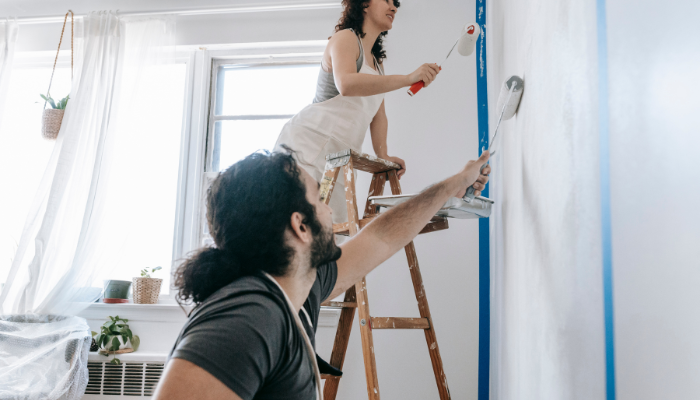
How to Paint A Wall Quickly?
Painting a room compared to changing the kitchen floor is easier and even those new to fixing up homes can manage it over a weekend. However, before starting with your paintbrush for “how to paint a wall quickly”, knowing some simple things such as preparing the walls and what tools are necessary will help you stay clear of mistakes while painting.
Necessary Materials
For any project at home, you need to have some tools ready to complete the work.
- Spackle (for filling the holes)
- Spackle knife
- Sandpaper
- Tack cloth
- Primer
- Painter’s Tape
- Drop cloths
- Paintbrushes
- Shedless Rollers
- Paint tray
- Paint
Prepare Walls for Painting
If the walls require new paint, it seems they have not been painted recently. Before applying another layer of paint for house interior painting, you should cover any holes and remove spots or blemishes.
Check for Imperfections
Before starting to paint, check if the walls have any cracks, holes, or stains. First, observe the wall and determine if any damages require fixing. Then fill holes from things like pictures and peel away areas of chipping paint.
Sand Patched Areas
Before painting, if any imperfections require fixing, those spots must be sanded smooth. Otherwise, you might end up with spackling lines showing through and creating an unbalanced appearance on the painted surface. After smoothing with sandpaper, clean the dust using a tack rag. It is possible to apply primer selectively on areas that have been mended or filled, although applying only a primer is usually not needed. Priming an entire wall is only necessary if it’s in bad shape or extremely stained.
Clean Wall Marks
If there are some marks on your wall, experts who paint suggest using a cloth and normal cleaning liquid to clean the spot. For hard grease spots, trisodium phosphate cleaner is an option; it’s not poisonous and suitable for gently cleaning the wall to take away any dirt or oil.
How to Paint A Wall Quickly? Steps of Painting a Wall Quickly
1. Cover Areas You Don’t Want Painted
After making sure your wall is in fine condition, apply tape for painters around the baseboards and additional places such as moldings, casings of doors and windows, fixtures for lights, and plates for switches. Remember to cover things of value that are close by too. Shift the furniture to another space or gather it in the middle of this room and use plastic or heavy fabric to cover it. Lay down some cloth on the floor for protection.
2. Pour Your Paint
Now is the moment to open your can of paint and transfer it into a tray. The sloped part of this tray assists in spreading the paint consistently on the roller. Trays can be useful for speeding up work when multiple painters are involved. For larger tasks, it’s better to use a roller screen and a 5-gallon bucket together to increase efficiency.
4. Paint Along the Trim
Professionals call it “cutting in” when you use a paintbrush to apply paint on the upper and lower parts of your wall near the trim. You should glide the brush gently from one side to another while painting. Experts say to paint the edge parts first, then do the ceiling or middle of your walls. But you must remember to only paint little parts, like 4 feet of the edge at once.
3. Paint the Ceiling
When you paint a full room and the ceiling, it is good to begin with the ceiling and then continue to the walls. This way makes painting faster and lets you finish the walls and other areas in your home swiftly.
5. Paint the Walls
After finishing the ceiling, proceed to paint the walls. Soak your roller in the paint and apply it to the wall with up-and-down movements starting from high up and going down towards the floor.
6. Leave a Wet Edge
While you are painting ceilings and walls, it is important to maintain a wet edge. This implies that the areas where you paint edges should remain moist and not become dry before you return with your roller for vertical strokes. This is the reason it is better to paint in little parts. If the first area of paint gets dry before you finish painting other parts, those early sections will be visible behind the new layer.
7. Drying
After you have done the painting, it is good advice not to touch the walls for a minimum of two hours. Better to use your effort to take care of your brushes and leftover paint. Wash your brushes and rollers using warm water and perhaps a small amount of gentle soap. Because many paints have a water base, they come off without much difficulty. Continue washing until there is no more paint, after which it can dry and be put away. For the paint cans, simply close them tightly with a hammer and keep them in a place that is cool and not wet.
Conclusion
Each step mentioned for “how to paint a wall quickly” can assist in completing a fast painting task that not only saves time but also quickly renews your property’s appearance. Ensure you adhere to these steps to give your walls a fresh new look, avoiding dependence on professional painters.
Read more about The Power of Professional Commercial Painting.
Leave a Reply